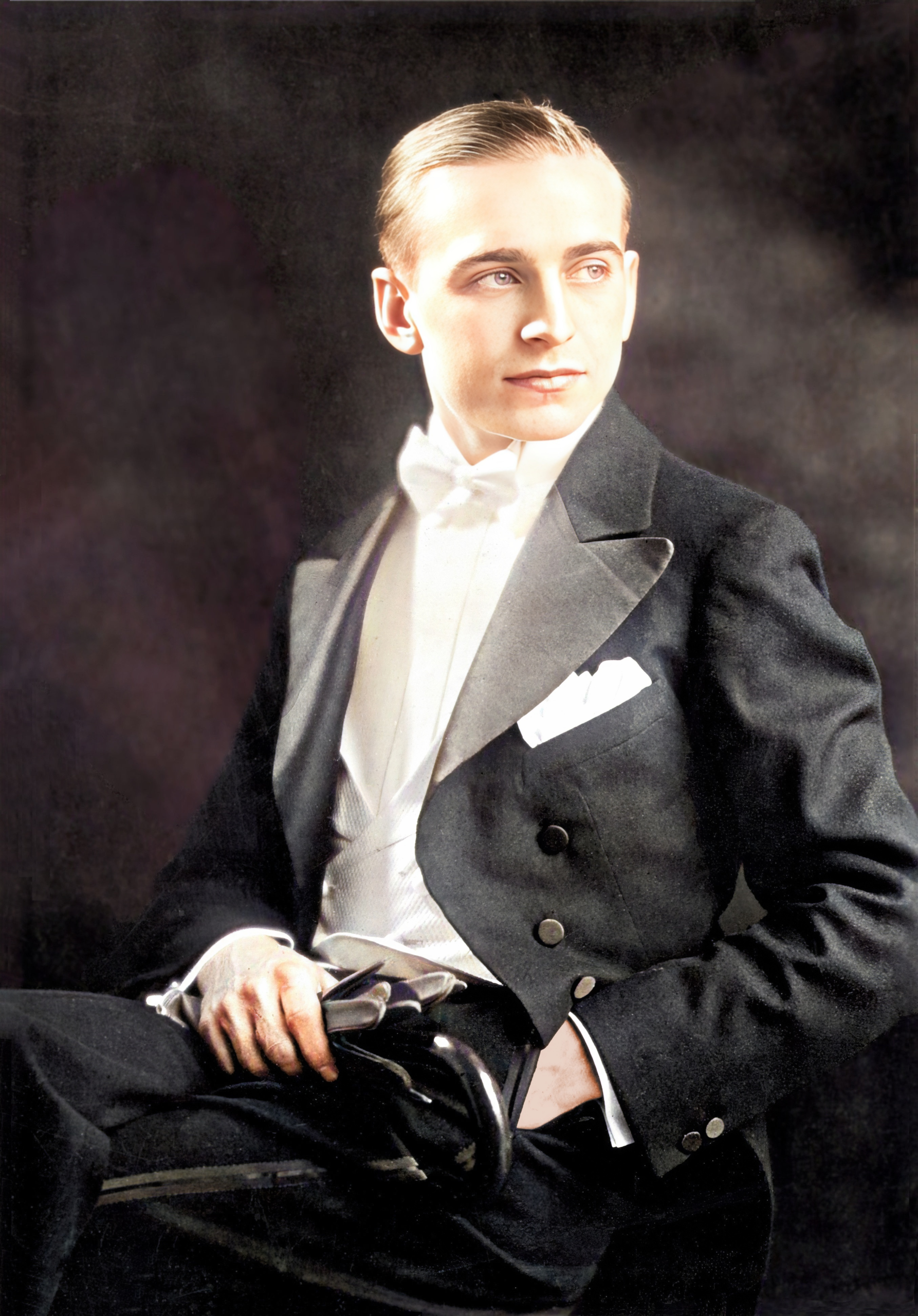
Clair Omar Musser
CLAIR OMAR MUSSER (b. Oct. 14, 1901; d. Nov. 7, 1998)
Photo restored and colorized by David Harvey. Used with permission.
Clair Omar Musser was one of the most important influences on the development of the marimba in the 20th Century. All facets of the marimba -- design and construction, teaching, composing of etudes and solos, a four-mallet grip and even the popularity of the instrument itself -- all came under his positive influence.
Musser began his career as performer, touring the country playing his own light-classical arrangements of Chopin, Mendelssohn, Bach, Paganini.
Later, as a sales manager of the J.C. Deagan, Inc., Musser conceived the "Marimba Symphony Orchestra", a concept that proved effective not only musically, but also in terms of sales of marimbas and a larger audience for the instrument. From 1933 to the early 1950’s, audiences were amazed by Musser’s newly conceived ensemble. The most famous of these orchestras was the 100-piece "International Marimba Symphony Orchestra" that toured Europe and gave its final performance at Carnegie Hall in New York City.
After the Second World War, Musser formed his own marimba company that is now a part of Selmer, and it still bears his name. The first marimba designed for that company, the Canterbury Model, was the first "low A" marimba and it can be said that with that instrument, Musser began the slow push back to the 5-octave range that Deagan had in the early part of the 20th century.
Musser was a teacher of renown, heading a marimba specialty program at Northwestern University for ten years. Among his most famous students was Vida Chenoweth who first recorded three of his Etudes and the G Major Prelude.
Musser's solo compositions, transcriptions, and ensemble arrangements have enjoyed great popularity. His Etudes have remained a staple in marimba repertoire, and they continue to be performed daily all over the world. The study and mastery of Clair Omar Musser's Etudes is considered by teachers and performers to be a rite of passage into technical competence. Almost all marimbists study at least one of them, and most professionals have learned them all.